
By Louise Pratley M.Ost, Registered Osteopath | Owner of Osteo & Physio Exmouth
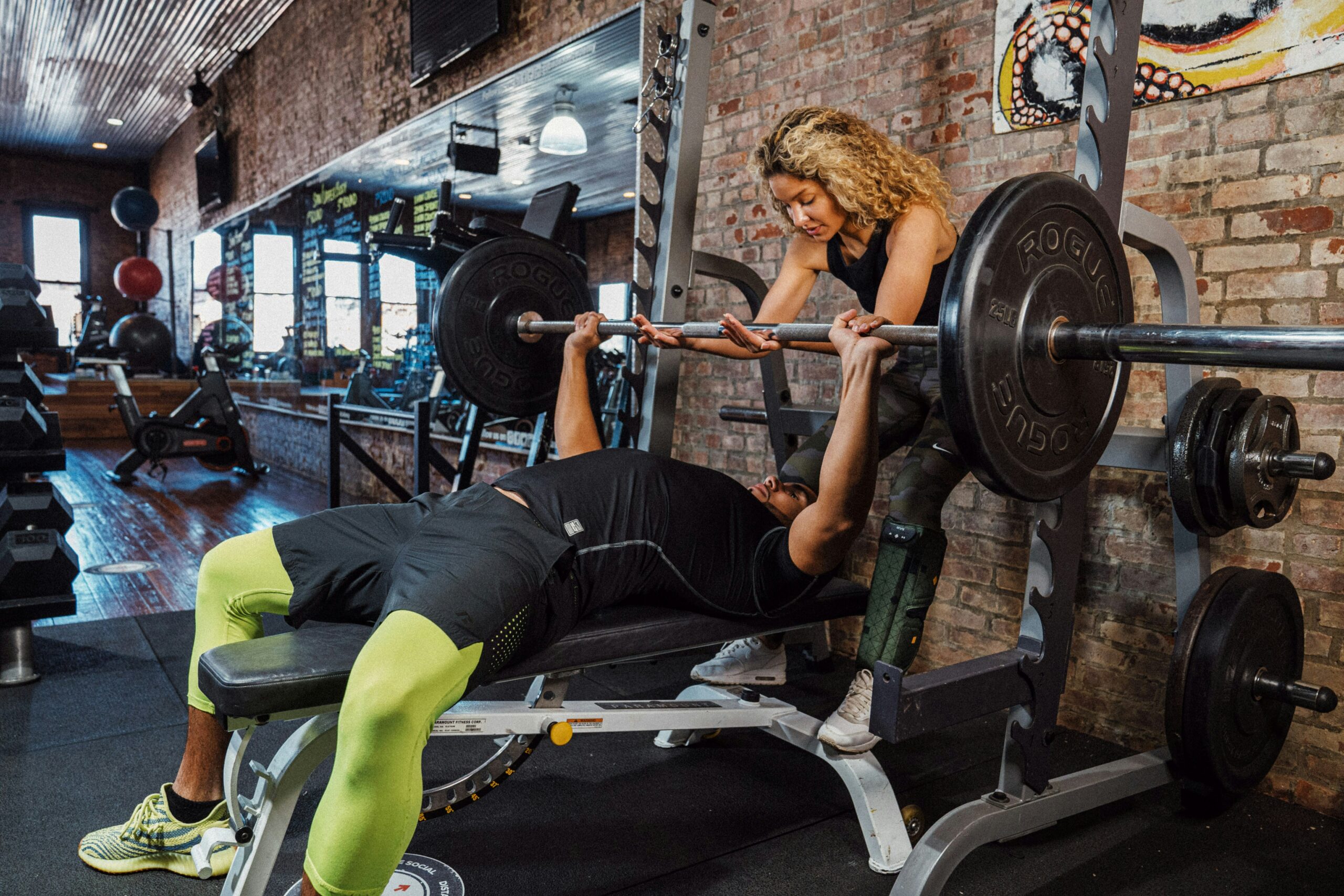
Ask almost anyone on the gym floor what their favourite upper-body exercise is and nine times out of ten you’ll get the same answer: the bench press. My patients absolutely love adding this exercise within their upper body strengthening plans.
It is the undisputed gold standard of pushing strength, building pectoral density, front delt drive, and triceps power. But as an osteopath working with gym members every day, I see the flip side of the coin just as often. The bench press is frequently the number one culprit behind the classic “gym shoulder” that sharp, nagging pinch at the front of the joint that flares up every time you reach overhead or lower a heavy barbell. Most patients will describe this as an intense pain which is worse when they are reaching above their heads or sometimes across their bodies.
The good news? You don’t have to ditch heavy benching to keep your shoulders pain-free.
Shoulder injuries are rarely caused by the weight on the bar itself. Instead, they happen when we ask this high mobility joint (typically sacrifices stability for mobility) to handle massive compressive loads from an anatomically vulnerable position.
Let’s look at what’s really happening inside the joint, review the science and dive into four practical tweaks you can use during your next session at LED Leisure.
What actually happens to your shoulder under the bar?
The shoulder (glenohumeral joint) is a ball-and-socket joint designed like a golf ball resting on a shallow tee. While this design allows for exceptional mobility, it relies almost entirely on the rotator cuff muscles, tendons and ligaments for stability under load.
Directly above the ball sits the acromion process, a rigid bony shelf of your shoulder blade. In the narrow gap underneath (the subacromial space), your supraspinatus tendon, bursa and the long head of the biceps glide back and forth (lots of anatomical structures in one place)
When you lower the bar with your elbows flared out at a 90-degree angle to your body, that space virtually closes.
Over hundreds of reps, that chronic pinching leads to microtrauma, inflammation and rotator cuff tendinopathy.
4 Osteopath-approved tips to protect your shoulders
1. Think 45°–60° elbow angle
The most common technique mistake on the bench is letting the elbows flare directly out in line with the collarbones (forming a T shape with the torso). Tucking your elbows between 45° and 60° places the humerus safely in the scapular plane. Research by Larsen et al. (2021) confirms that this position maintains high pec and tricep recruitment while protecting delicate subacromial structures. When in the gym you can iImagine trying to gently bend the barbell in half towards your toes as you lower the weight to your sternum.
2. Dial in your grip width: Use the 1.5 x Rule
A wider grip shortens the range of motion, but it dramatically magnifies the rotational torque placed on the front shoulder capsule. On our standard Olympic barbells, place your ring or middle fingers on the knurling guide marks rather than spreading out to the smooth outer collars. This helps to reduce the amount of pressure being applied on the shoulder joint as your press.
3. Build an active upper-back shelf
Lying flat and passive on the bench leaves your shoulder blades loose. As you lower the bar, the humeral head slides forward, forcing the rotator cuff to hold the weight without any structural backing. You want to aim to create a rigid base of support through scapular retraction (pinching your shoulder blades together) and depression (pulling them down toward your hips). You can add this in before you start your first repetition. Research by Koziris et al. demonstrates that an active scapular lock seats the shoulder firmly in the socket, provides a solid muscular shelf and protects the anterior capsule during the bottom transition phase.
The best way to imagine this in the gym is that you are pinching a £1 coin between your shoulder blades and tucking them into your back pockets before you derack the bar and hold that coin tight for the entire set.
4. Swap cardio for a 5-Minute activation warm-up
A quick walk on the treadmill raises your heart rate, but it doesn’t prime the dynamic stabilisers of your shoulder girdle. Research by Reinold et al. (2004) highlighted that targeted low-load activation exercises significantly enhance rotator cuff recruitment and dynamic stability during heavy compound pressing.
The 5 minute routine included:
1. Resistance band face pulls (2 sets of 15 reps): This aims to activate the rhomboids and lower trapezius muscles for upper-back stability.
2. Band external rotations or Pull-aparts (2 sets of 12 reps): Primes the infraspinatus and teres minor muscles to center the joint.
3. Thoracic foam roller extensions (60 seconds): Opens mid-back extension so you don’t over-arch your lumbar spine.
When to seek help
Lifting heavy should leave your muscles fatigued, not your joints aching. If you feel sharp pinching during the descent, pain radiating down your arm or an ache that lingers for more than 48 hours then it may be the right time to have a specific assessment of your shoulders at surrounding joints. At Osteo & Physio Exmouth we are always here to help and answer any questions you have with our expert team of Osteopaths, Physiotherapists and Sports therapists.
References
- Fees, M., et al. (1998). Upper extremity exercise-induced injuries in the strength athlete. Sports Medicine, 26(2), 127–142.
- Green, C. M., & Comfort, P. (2007). The affect of grip width on bench press performance and risk of injury. Strength & Conditioning Journal, 29(5), 10–14.
- Larsen, S., et al. (2021). The effect of grip width, bench inclination, and elbow position on muscle activation and joint mechanics in the bench press. Journal of Sports Sciences, 39(19), 2235–2244.
- Reinold, M. M., et al. (2004). Electromyographic analysis of the rotator cuff and deltoid musculature during common shoulder rehabilitation exercises. JOSPT, 34(7), 385–394.
- Wagner, L. L., et al. (1992). Effect of grip width on bench press performance. International Journal of Sport Biomechanics, 8(1), 1–10.